Page ID: Page 219365267025 If Your Team Is Producing AI Slop, Here's How To Fix it
If Your Team Is Producing AI Slop, Here's How To Fix it
Listen to podcast:
Custom Offer:
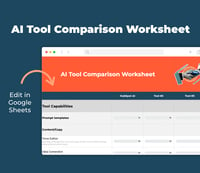
AI Tool Comparison Worksheet
Consolidate AI tools and identify gaps in your tech stack with this editable tool comparison worksheet.
Access for Free
Anti-AI Slop Checklist: https://clickhubspot.com/olkw
Ep. 439
Are you just passing AI-generated slop back and forth at work?
Kipp and guest Hilary Gridley (founder of the newsletter Writerbuilder) dive into how teams can escape the AI slop doom loop and leverage artificial intelligence to scale taste, judgment, and high-performance work—not just automate mediocrity. Learn more on the crucial role of clarity and context in AI-powered teams, why leaders must redefine what “good” looks like, and practical tools to set quality bars, create feedback loops, and eliminate sloppy outputs from your team’s workflow.
Mentions
Hilary Gridley https://www.linkedin.com/in/hilarygridley
Loop: Outlearn. Outmarket. Outgrow https://a.co/d/08By5k2w
Writerbuilder https://hils.substack.com/p/writing-is-building-now
Maven https://maven.com/hilary-gridley/ai-powered-people-management
Whoop https://www.whoop.com/
Claude https://claude.ai/
Get our guide to build your own Custom GPT: https://clickhubspot.com/customgpt
Resource
[Free] Steal our favorite AI Prompts featured on the show! Grab them here: https://clickhubspot.com/aip
We’re on Social Media! Follow us for everyday marketing wisdom straight to your feed
YouTube: https://www.youtube.com/channel/UCGtXqPiNV8YC0GMUzY-EUFg
Twitter: https://twitter.com/matgpod
TikTok: https://www.tiktok.com/@matgpod
Thank you for tuning into Marketing Against The Grain!
Don’t forget to hit subscribe and follow us on Apple Podcasts (so you never miss an episode)! https://podcasts.apple.com/us/podcast/marketing-against-the-grain/id1616700934
If you love this show, please leave us a 5-Star Review https://link.chtbl.com/h9_sjBKH and share your favorite episodes with friends.
We really appreciate your support.
Host Links:
Kipp Bodnar, https://twitter.com/kippbodnar
Kieran Flanagan, https://twitter.com/searchbrat
‘Marketing Against The Grain’ is a HubSpot Original Podcast // Brought to you by Hubspot Media // Produced by Darren Clarke.
hey we all thought getting people to use ai was gonna be the hard part it turns out that we were completely wrong the harder problems is getting them to use ai correctly we're now flooded with ai slot one person pasting something into cloud and then sending that to the other person it's becoming epidemic in your company and every company out there today we're joined by hillary grid she built an amazing system at whoop and turned all this ai slot into repeatable quality she's showing us how to build real tools today that can fix this problem you wanna stick around she's take us behind the scenes this is going to up level the quality of ai work within your company dramatically let's get to today's show hillary welcome to the show today we're really excited to have you on marketing screen thank you i'm so excited to be here we're talking about a fun topic that i think literally applies to every single person in the world and especially every single marketer or builder in the world and that topic is we've all started to use ai and ai has become a big part of our lives and now we are flooded with ai slot i'm on a group chat and this is senior leaders at all like brands that you all have heard of and know is like i feel like so much of my day is reading people basically typing something into claude taking that response from claude goes to another person and claude summarizing it for the other person and it's like going back and forth and basically the tagline of this chad is like people are outsourcing their taste and their judgment to a decision making to ai and it's creating this huge wave of crap and s out there yes and we have to stop the slot we cannot let this tidal wave of s wash us all the way because we we will not be a happy campers if that happened yeah and so you were obviously you were builder at whoop you saw this firsthand you were you you were here through kind of the this first wave of ai which is like oh we all need to start using ai now we're past that and we actually need to actually get into a place where it's like oh we're using ai to scale our case and judgment not to outsource our taste and judgment and so maybe like from the front lines like take us behind the scenes like what did you see and what have you seen that is like the big reasons that this problem exists sure so i've seen this from a few vantage points as you said i saw as i was leading teams at wu and i was working to get adoption in the early days of we could see people working differently with ai we were trying to get this out into coding teams into non technical teams across the entire organization and figure out how to do it in the right way and then from that i actually started teaching a course called how to be a super manager with ai and so through that course i have talked with hundreds of managers at other companies who have also been on this trajectory and i have seen how the pain points that managers and that independent contributors have have changed over the past two years so when i started this course i was still at loop and this was in february of twenty twenty five and the most common thing i was getting asked was how do we get people to actually use these tools and this was something that it whoop i think we did a a very good job of and we had some really smart folks on the internal ai team there that we're really focused on finding power users getting them equipped with the tools and then letting that sort of you know trickle out to the rest of the organization and so that's what a lot of people were doing and it was it was really great it was fun you had these like ai super users who were really just super charging the way they worked and the way that their peers worked and then i noticed something started to shift which is wait everybody's kinda doing this in their own way problem one kinda it's all it's all decentralized and completely getting those if people are using this stuff the right way or the wrong way i totally agree exactly and it and it kinda has to be in some ways because you need the domain experts to be the ones who are actually figuring out how to do this work right you need a marketing expert to figure out how you make a really cool ai powered marketing workflow and just pulling in somebody from an engineering team who has no domain expertise or on marketing is not gonna do very a good job of that so it kinda has to start that way but everyone's doing their own thing they're all pulling from different context right they're all using different sources of truth some of them are stated some of them are conflicting with each other some people are connecting their tools some people are not connecting their tools so that's problem too is there's no kind of canon right there's no central brain although many companies are kind of attempting to do this it's easier said than done and then the third problem is nobody is really articulating what good looks like here and this is the problem that eye i care the most about as somebody who's led high performing teams as somebody who teaches people how to lead high performing teams in this ai era is it really have to be clear about what good looks like and if you are not setting that quality bar as a leader or as a manager you can't be surprised when that quality starts slipping and when people find out that there's an easy button that they can press to do their job for them and maybe it does like an okay job and maybe in some cases okay is fine but then you noticed it starts kinda seeping into more and more things and that's when i think you get this dynamic that you were just talking about where it it you kinda have this feeling that you're just like talking to a person who's just an intermediary for claude where it's like i i can go talk to claude if i walk to i'm talking to you and i think that that is something that i'm hearing constantly for managers now it's like what are we gonna do about this and so if you're interested in everything we cover today you're gonna wanna scan the qr code click the link in the description below and we've got a ton of resources to take you to the next level i have felt that what you've said deeply and i've talked to a lot of other leaders who have also experienced what you're talking about there's there's a few things i would add like my hottest take here is that you had two types of managers in the pre ai world you had managed who were deep crafts people and that might be a amazing email marketer a great creative director might be a great ux designer or pm and then you had what i'd call context carriers that their whole job was to move information around and like they didn't really have deep craft expertise but they were kind of a human api they were a glue that could move context around mh and ai is kind of obsolete that second group of people and there's still a lot of those groups of people across all these companies and because companies are in the midst of making these transitions and i find that that that the s is more prevalent with with the context carriers because they can't do exactly what you just said they don't know the standards and and how to set them and they're not deep enough in the technology and the application of the technology to actually teach their teams what they're good at is moving information around and ai makes it really easy to move information around and that's what creates all the sla is you get this information regurgitation on an like an endless cycle i think that's exactly right and i would even say for the information carriers and the context carriers there is still a role for people like that to play and you can be really good at it right there are ways to be not very effective at it i i think a lot of times like a lot of these problems come down to as a manager if you're not really sure what you do or what value you bring then that is going to be made very apparent in the ai era if it was not before because if you're just saying to people like hey run this by claude what value are you bringing to that conversation right but i do think for somebody who is like a a context thinker who has a a genius for that it is easier said than done for a company to figure out what context is real and to keep it updated and i think especially now like this maybe gets solved in six months i don't know but i think what you're saying about the people who are who real crafts people they have a completely different opportunity which is how can i shape these tools so that they are making my team better at what they do even if you took the tools away tomorrow and this is again when i teach in my classes is like you want you wanna build these tools in such a way where they are tee teaching your to your team how to do things how to do a good job and what good looks like but they are teaching it in such a way that if you you kicked the crutch out tomorrow they wouldn't be like oh no i haven't learned anything and i think that is why it's so important for leaders to be really involved in these implementation questions how we design these ai systems because there's so many choices to make along the way what does the human do what does the ai do and how do they interface that really do have an impact on like the the cognitive ability of your team and whether your teams are getting better and if you can make teams that get better those teams will make the systems get better which then make the people get better and it creates this virtuous cycle as opposed to if you just have kind of this cognitive rock happening where everyone's outsourcing their judgment to the ai nobody's questioning anything that's coming out of it the people get worse that makes the systems worse and then you get into this sort of s doom loop yeah once the swap starts it's really hard to break that s dude as you're saying i i have a couple of things i wanna follow out there but before you use the word context many times and context it's a word that's getting thrown around by everybody out in the world me included i would love for you to define for everybody watching today when you say context what do you mean i mean it in its most kind of pure sense which is what is the information that a person or an ai agent needs in order to do a job well right if i go to a new hire and i say you know plan this launch for this feature that we have coming out if that's all the context they have they're not gonna be able to do a good job but if i tell them here's everything you need to know about the feature and by the way here's everything you need to know about launches that we've run in the past here's what worked here's what didn't work here's what we tried with that context a smart person can really build on that and do a really excellent job planning this launch but me is the manager how i think about the information that i give to them in order to do that right like you don't wanna give them way way way way way too much if if i say like here's every ab test that we have ever run the history of this company knock yourself out right like that's not helpful but likewise it is not helpful to to give them no one for and so how you decide what information you give them is actually like a a core challenge of being a good manager and that as i said is true whether you're managing humans or whether you're managing agents because an ai agent is gonna have the same problem i think there's a third level to it and it's the thing that i believe the most in which is it's the clarity and decision making foundation that leads to all the work that you need to get done if you show me a team that's really executing really well in general they're very focused and they're super clear on what the strategy is what their priorities are who they're serving how they're adding value to them and it's easy to just lose sight of all those things and just ask claude and have a hundred different people asking claude a hundred different ways what the answers to those questions are you know kieran and i have a book coming out called loop it's coming out in september and one of the ideas we have in the book is what we call taste profile and it is all your context that you need to build your marketing and it is essentially all of the stuff that isn't in an ideal customer profile non demographic data so like what that customer believes what they feel what pushes them too far all of that because that is actually like the instructions that ai needs they need a deep emotional understanding of the customer and the other part of it is all the stories you as a brand you as a company you're trying to tell you know like what is the core product narrative if you have what is the core emotional brand story the thing you want people to feel and if everybody on your team has access to that same case profile in this case or same context file and what you're saying the quality of work automatically goes up the consistency automatically goes up and you don't have this s cycle because you're you're you're gonna reduce so much of that because the judgment making by both ai and the people gets a lot more focused and what i think is so funny about that so i totally agree i think that's amazing i love i love that concept and what is so funny to me about it is even if we had no ai if you as a marketing leader took the time to assemble something like that and dis it to your people we everything would improve immediately everything would approve dramatically right and that and it has happened in some ways before and like with creative brief and there there other artifacts of this but now in the new world you actually be more depth and i think that you know sla is a function of a lack of depth is my argument right like you don't have contacts you don't have depth in what you're trying to do and so you stay at this surface level i find that the people who are really great at working with ai have a ton of beliefs some point of view and then they'll go back and iterate a hundred times on something it's not just asking claude to spit out something went off but i know you have a bunch of lessons that you have learned and advice for folks who are in this swap cycle and how to get out of it and i think i think you got a couple things you wanna share with the audience today so i wanna kick it over to you kinda kick us off in the solution stage of if you are on a team you're in a company you founded a company and just like i'm just surrounded by endless words and images that are kinda sloppy and crappy and don't actually have any value what the heck you do sure win a buyer ass ai for a solution like yours do you know if you're showing up or not in hubspot we've got a great product that actually helps you get discovered in ai search hubspot au helps you show up in these moments with the right answers buyers are looking for before the first click before the first fill that's the moment hubspot au is built for go check out hubspot au you can trial it for free and it's gonna help you understand how you're showing up an ai search and how you can show up even more the the broad theme of what i'm gonna talk through is that you have to make it super clear for people what good looks like and that shows up in a few different ways i'm gonna show a few different tools and ways to think about doing that but if you take nothing else away from this i think that is the most important thing what does good look like what does good work look like what does a good version of this job look like in an ai era and if you don't have clarity on that you cannot expect anyone on your team to have clarity on that and if they don't have clarity on that you can't expect them to meet that bar and so much like you were saying you know if you take the time and effort to cod all the context that people need to do a good job whether ai has access to that or not people will become better at their jobs for having that yeah it's the same with this like i i laugh with all this ai stuff because it's like it's just could leadership management exactly exactly yeah it's like right it you need to bring the clarity for expectations and for quality and if you can do that and you can help people meet that bar you're gonna be happy no matter what the technology you're using can you talk about setting a quality bar real quick because i think humans have a hard time one setting a quality bar for themselves and depending on the manager sometimes they're scared to set the quality bar and sometimes they're setting the quality bar too aggressively and too high mh so maybe like help us unpack what it means to do that well yes so i wanna think about it a two level and the first level that i'll start with is what is what does the job look like like what does a good version of this job look like and i think what i mentioned early on you know people were sort of giving ai to super users seeing how they used it and then kinda letting that sort of trickle across the organization finding examples of good versions of using ai and then piecing those together and i think that was a great way to start but at this point i think we need to go beyond that right and in general i like to think where are we trying to get to and then how do we work our way backward to where we are today to figure out how to get there rather than how do we start from where we are today and then incrementally change things to try to get to some future state and so i think we were past the point of starting from where we are today imagining our jobs today and then thinking okay how can we add some ai here and some ai there right like i already am going to write a brief like can i write that brief for me whatever so instead i would urge eat leaders to say like think about a year two years five years in the future five years is maybe hard to predict think about two years in the future i can't imagine least six months i know okay worlds move fast that's true that's true every week you're like oh gosh seriously oh everything's changed now so imagine a year in the future right like what if all your dreams come true and your team is totally ai pill and they're working in an ai native way like what does a day in their life look like and how is that different than what a day in their life is like today and can you show that picture to them so that they have the clarity they don't feel like they're just throwing spaghetti at the wall try random things with ai and see what works but they actually have something they're working toward well so that's the first thing that i and i would just interject that i think it's real important for people to understand that that dream state where people are working an ai native way they could also still be doing the wrong things and not being productive right it's not just working in an ai native way it is working against a strategy that's gonna add value to your customers to the business and i think so many of you know again i'm on these group chats and it's like people are doing so many cool things mh but over half of those things have like no value yes and that's the that like that which is a different layer of s think when we think about eye swap we think of like cloud text or chat cheap text there's a whole other level of swap of like i built these ten applications that nobody's ever gonna see or use yes because i thought it was cool and only i thought it was cool and that's as again as manager or as a leader you should be thinking like all those levels like at with the top level is like okay how are people spending their time what are they doing how are they working and then there's a level below that which is like what are the you know of of the hundred projects they could be working on what are the ten they choose to work on and how do we make sure those are the right ones and then on a the level below that it's like for any one project right what is the work that is coming out of it and what is good for that piece of work look like and how are we you know c cod firing and system digitizing that in some way and it is i it goes all the way up and down the stack like you can't you can't just focus on one piece of it you really do have to be managing at all layers of that so i can show you a bit about how i think about the kind of top layer and then we're gonna go down to a very granular layer for a piece of work yeah how do we actually think about know articulating what good looks like for that we should do that pull that up while you it up i would just say to reiterate what you're just saying i think this ai transformation of work and getting rid of s is not that just dissimilar to any other technology that we've had and i i've read this book recently called inside the box by david epstein david's coming on the show soon and he's got great stories in there about how constraints and focus help you and that's essentially the thesis and i think that's especially true in the ir but he has the whole story of how pixar you know iterate and stayed laser focus to get to the toy story moment right and i think that is essentially the exact thing that's happening in every team is that your job as a leader is to set the constraints and focus because you can't have people going off and doing a hundred different things as you were just saying you need them actually going really deep on the one to three things that you believe are going to have the highest impact when they're done in this new ai native way it's so true and that's why i always kinda laugh when people say well is there a reason that we need managers in this ai world and it's like on one hand there are a lot of ineffective managers out there we've never needed in ineffective managers and so if some if some cleanup of ineffective managers is happening like fine but to your point the these the scope of chaos of what a single person can do if they are if they are not given that clear context clear strategy like if if they're not gonna point in the right direction it is just we're seeing this we're seeing this play out what kind of chaos it can create when every single person has their own mental model of if here's what i should be doing here's what matters here's what good looks like and there's there's no kind of orchestration happening between that and so i actually think having a good managers is more important and higher impact than ever but yes if if it was a manager you're not doing any of those things then if you're only gonna add to that case this is the classic example of the more things change the more things stay the same you still need like the great fundamentals truly alright walk us through what you got here okay so what i like to tell people is think about a situation right that you are going to encounter in your role that somebody on and your team is going to encounter in your role and then how would you map out what a person does today when they're navigating that situation like something has happened what do they do and then what and then what and then what and then take a step back and try to reimagine what that would look like if it truly had ai at the center of it and to have ai at the center of it i basically think everything's happening proactively right so anything that today you kinda have to notice or be alerted to or go in and find imagine that signal is being served you proactively and then as you think about every step that happens after that think through okay well what if ai did the next thing what if it went even further what if it went even further and so i have an example of that here i show you one that i have for a marketing team a situation right your ceo has just asked why is a competitor's new campaign sound exactly like this positioning that we have sometimes examples feel too real this is one of sema says everyone watching at this moment u well i don't know we we interviewed all the same people i don't know how this happened but anyway so i think about how this works today right where you kinda you pull up your competitor site you're sort of trying to you're reactive figure out what happened right like oh wait what is their campaign let me go see it let me go find their social let me go find their website let me piece this whole thing together and then you kinda put this all in a dock and then you kinda look at your messaging and their messaging and you're going back and forth you call the team together you kinda whiteboard bunch of my ideas out is somebody takes pictures of the whiteboard nobody ever looks those pictures again at some point you write a brief for a designer to try a a different spin on this your ceo was pest you saying what's going on what's going on and you're like we're working on it right does that sound familiar same sounds too familiar so what would this look like right if nothing was a surprise and if the ai could always go one step further so if nothing was a surprise right the system has flagged this somehow right imagine you have an the agent that is constantly scanning your competitors for their competitive messaging and comparing it against your own and so it should proactively be flagging when something like this happens but then what would it mean to take that a step further right it's not just flagging for you and saying oh hey we've got a problem it's proposing three different angles right each with a landing page mock up that you can preview so it's kind of prototype out these different responses and then you as the human can kind of use your taste use your judgment to choose between those and maybe it pulls in some supporting data maybe it has a a conversion estimate on each which is pulling from your site data and so maybe you pick your favorite ones your system updates the landing page and then it updates all the trickle down the ad copy the email sequences i know this happens in you know a a couple hours maybe less yeah and then it allows you to then respond to your ceo and say hey we're on top of it we have a new page shipped this is what we expect i'll follow up in a week when we have some results from how this new page performed and so something like this like hopefully this sort of illustrates the difference between a situation right situations might not really change but what happens as a result of that situation can change a lot and so i encourage managers to try to go through and exercise like this and to really think about what are the types of challenges problems your team is solving today what would it look like to solve that in a more ai native way and then walk them through that like paint that picture for them and bring it to life with really concrete details like very concrete to the point of you know what are the data sources that this is pulling from what is the exact next action that the ai is doing and what is the role of the human in all of this and i think giving people something like this it's just it it makes them in my experience if it gets them a little bit excited because they can see where this is going they can see themselves in it it reduces the fear uncertainty and doubt of just like i don't know man my manager just keeps telling me to use claude and it doesn't seem like they have a clue right it gives them confidence in you because it seems like you know what you're doing which is important and it gives it gives them something to work too like what i have on the right here might be a little bit beyond the capabilities of your system where your organization today but you can get there you could get there right now if you wanted to yeah i and i think what's interesting is you you break down on the workflow i think really well and i would say there's also like kind of a top line constraint one of the ideas we have in the book is like things have moved from months to minutes you know really something we believe and if you just had a a goal underneath your problems staying up there which is like you need to get your ceo a prototype which here she can review within thirty minutes of the new page mh right that's actually what we're talking about we're talking about solving a problem in a way that was never before possible and the steps you have here essentially that's what they're solving against they're solving for this thing of like oh my ceo's has got this crazy problem before it would've have taken me like weeks to like get him or her something to look at now i can get them something like within thirty minutes and by the way it can't be sloppy because i'm not gonna send a swap landing page to my ceo right so it's like kind of a really good constraint and forcing a function and if you can do something like that then you can probably almost do anything that is slot free right because that it's a good way to show i actually know how to work in this new world in a way that's valuable to that point when you are making things concrete like this you can have real conversations about what a person's role is and that includes like the accountability i like i tell people the job has never really been about the work it's always been about accountability for the work right in theory you could have contracted your workout to some third party and sur suspiciously had them do the work and then send that to your boss and the only reason knew one would ever know if that happened is if the work wasn't good and then most people would say well it would be impossible for this random third party to do the work secretly without having any information as good as i could so i'm just gonna do it myself but now anyone kind of has that that third party and it doesn't have to be secret and it turns out it's actually pretty good but you're still accountable like you're still accountable for the quality of your work and so you can say something like this to your point like your job is to get a prototype to the ceo and success looks like it's a good prototype yeah if i look at it and i'm like no thought has been put into this and this is just like clearly ai slot that you typed in hey make a prototype for me and then sent out to the ceo like you're you're not meeting the bar but i see a lot of confusion to like i told my team to use ai and how they're using it but they're making all this bad stuff and i think that it's that's like too focused on how to do the work which is not actually what you wanna have the conversation about you wanna have the conversation about what you're accountable for and what good looks like exactly what the goals the constraints the timelines are and that forces you to work in this way like one of things i believe is that i believe some some and very few people are really good blank page people that they're like oh i know i get this blank page and i could just whip up the right thing i think peep most people are great editors myself included i'm a terrible blank page person but i'm a great editor and what i love with the ai world is i can get all these options that you outlined right it's like hey yeah i need help with this give me three different angles and then i can edit and move and say oh actually i don't like any of those three i like this other thing and that is i think a boo and a tailwind to anybody out there who i think it's most people who are just really good editors they just need to use ai in that way versus just totally outsourcing the thinking and the editing to ai itself i totally i think there's almost too much focus especially in non technical fields around automation which implies it starts the job it finished at the job and for me the way i think about it is like i still wanna do the things i love doing about my job i just i just don't wanna be starting from zero there are things where like me starting from zero i'm able to sort of bring some kind of generative seed into that which then the ai can sort of super charge but there's so many things we have to do over the course of the day where you just really the the cognitive of energy it takes to get from zero to eighty percent of it is a lot and it's not that different jade it right differentiation comes in like the you exercising your judgment and taste to really get it over the line and get it from good to great and so if you could have just good blend on your desk and then your job becomes getting everything to great like i i think that's a lot of i think it's a great way to work yeah in a world where ai swap is so prevalent now like the they're remarkable the o g decisions and content and products get way more rewarded and there's only come from people willing to make hard choices and having a real clear vision of what they're trying to achieve okay i think you walked us through a really good perspective of how work actually should get done and how it's transformed and changed a lot what else should people be doing to get the sla out of their own work as well as like the people that are working with so the other thing that i like to teach managers about is how do you make tools that give feedback on people's work so that they can understand where it is not meeting the bar and how to get to the bar and part of why i think this is important is because it forces a more iterative way of working where you are you are doing a shot at something you're trying it you're getting feedback you're improving it you're taking another shot you're getting feedback you're improving it historically that would be really slow to do if every single time they had to wait for your feedback right it's like piling up in your inbox and you as a manager you just like nobody wants to be the kind of manager that's like everything has to go through me in order to move forward but if presumably if you have some level of craft if you have some level of expertise that's actually quite helpful for your team and so you wanna give that to them as a way for them to make their work better not as like a process hoop they have to jump through but again as a way to just keep getting better and better and better and by the way this is something to your point around you know if you feel like you are getting s and you're just like it doesn't it doesn't feel like you put work into this one very simple non ai approach to that is just say to them like this is a good first start but it still feels too ai generated so keep going and i think a lot of times people get stuck in this like it's either bad or it's good right either did a bad job right did a good job and if you say this is too ai generated and you did a bad job which means you did something wrong and i think when you're kind of introducing this new way of working which is like the ai is helping getting you further and then you have to keep going it's not like hey this is bad like you made sloppy you're a bad person it's like okay this is you know maybe like a first take at this i it doesn't seem like you put a ton of thought into it i'm so i'm not gonna put a ton of thought into it why don't you take another pass and sort of put your spin on this and then i'll sit down and put my spin on this and so really like working and and doing that change management for teams to work in a more iterative kind of continuing to to tweak and iterate and make better and better and better way of working and so i have a lot of tools i've made for how to do this and what i teach is basically how to take expertise that's in your head and turn that into some kind of tool so it could be a custom gp which is just a very simple way to have people upload some piece of work and then get feedback on that and the feedback is not just what chat gp is saying but it's actually following a set of instructions that you have written that are based in on what you evaluate when you look at a piece of work and help them understand if they've met the bar or not but there's there's a lot of different ways you could do this as a skill if you're in c copilot you can do this as an agent or if you're in gemini you can do this as a gem so i made a tool called the executive editor and basically this is a tool that anyone on my team could upload an email that they were going to send to an executive and would give them feedback on how to make that email basically more likely to just get a yes a green light yeah continue doing what you're doing because i saw that so many times my team would put all this work into something they were working on and then they would you know think of as kind of a formality like oh you know we're gonna have to change the launch date we better give the ceo a heads up and then they would send this email and ceo respond to be like talking about we to change the launch date absolutely not like not acceptable we one of the things the ceo never wants to do is change the launch date just fyi free free chip for everybody out there yeah you know i always laugh when to give this example because people are like you know is our email like do we really need to be spending that much time working on our internal emails to each other and i'm like and you never had your day blown up because you know you like thought you were gonna do something that was gonna be relatively straightforward and then yeah you you're you're like hey is it cool we moved the launch date back a month and the ceo was like no absolutely no it is not cool not even the lit of it so i made this tool basically to help guide them through improving this and again this isn't something i wanted to spend my time on i don't wanna be editing people's emails for them so this tool is it for them but importantly it is based on the principles that i bring when i'm thinking about what good executive communication and managing up looks like this is different than if you were to just like me as a manager saying hey can you run your emails through claude before you send them is like there's no me in that equation yeah breakdown for us like how did you like what's the logic how'd you actually build this somebody's like you know what yeah i don't wanna look like an idiot to my ceo anymore i want the same thing like what what you do yes so this is a custom g okay if somebody would paste in their draft email and then it would give them feedback basically like pass and here's what to improve and here's some would rewrite to extract your standards so what are the ways like what are the things that i look for when i'm evaluating in email now that's kinda hard to do like if i asked you what are the five things that you look for when you are you know reading somebody's email that they're gonna send to a ceo i don't think i could tell you at this moment yeah but it's hard right yeah it's hard and so there's some ways that ai i can help with this my favorite one is like giving it examples so i literally had a document and in one column i had draft emails that people had sent me and then in the other column i had my revisions and i put that document i just uploaded it into chat and i said what is the difference between column a and column b like what are what are you noticing about the the edits that i make over and over and over again and can you help me spot the patterns so you guys very good at spotting patterns and it said yeah well sure it's you know you're you are looking for does it lead with the message like in the very first sentence right is it actionable is the tone right is it clear like is every single word adding clarity rather than ambiguity and so then i say okay can you turn those rules into criteria right give me five criteria and then write out in plain english what does passing versus failing that criteria look like and then you have a rubric and you can run anything against a rubric and so what you do you and you can you can say like write that rubric as a prompt that i can paste into a custom gp or into a skill whatever you wanna do it's just english right it's just gonna make an english document you copy it it says you know step one evaluate the the email across these criteria tell the user whether anything is passed or failed and then give suggestions for how to improve and then you just copy that paste that in the system prompt a custom gp and then anyone can use it anyone has access to your brain and the thing that i think is important about this is i've seen people who are sort of make these like second brains for their team i think it's really important to do it in a purpose driven way like you'll notice that i was not like i'm gonna make a second hillary which is just a whole bunch of documents about me that anyone can upload whatever they want and get feedback like i made this as specific as in an editor for emails that you are sending to an executive that you need to get a yes on and so i've made dozens of these and they're all that specific because i really i mean again this is sort of a silly example it's like internal emails but i really do care about what good looks like whether it is you know a a product requirements stock whether it's even a problem statement the design of an ab b test like i have opinions about what how you should do that what good looks like and so that's what i'm trying to encode in these tools to give my team basically on demand access to my own thinking models rather than just saying like yeah i don't the talked claude it's kinda like the ai equivalent of the old john wooden story where you know the first day of basketball practice at ucla and john within the famous coach he'd start with having everybody put their socks on you know it's like the most fundamental basic thing like you need to do like can't play based basketball without socks yeah right and what you're basically saying is that there are certain touch points in every person's day and how they do work they're are foundational and one way to avoid s get better outcomes as well and just be more successful in your job or your career is to have little very focused tools for those moments you showed us a really good example of them everybody probably has six to eight that they probably should build that will actually set that foundation and set that bar to actually make them position for success and like everything else like i get so much clarity by going through this as a manager it's actually really good to sit down and ask yourself what do i think success looks like you know what like what what what is a level that if my team is doing this on a consistent basis i will be happy and how can i articulate that and even if you don't go and make any tools out of this even if you just have conversations where you say that to people like you're gonna be a better manager yeah the best ai work has nothing to do with ai getting clarity understanding standards getting clear on who you're serving and how you help them all of those decisions which you can be hand waving and ignore really easily but when you set them really helps you transform hillary this has been an awesome awesome show today i have taken away so much from our conversation i think you've taken people behind the scenes to actually understand what it's like to work in a really high performing team it isn't just slapping ai text back and forth to each other where can everybody find out more about you if they wanna take courses do everything else like where can where can folks find you great i have a subs stack where i post the newsletter that's probably the best way to stay in touch with me it's called hills dot subs dot com h i l s just one l and then as i said i teach a course called how to be a super manager with ai i on m so you can find me there and yeah i'm i'm around the internet talking to managers and sharing what i hear from them well hillary this was incredible can't wait to have you back on in the future with more lessons learned and thank you for joining us on marketing at screen thank you so much for me let me tell you about a great podcast demand decode from the team at b a b website and demand generation agency comes demand decode the podcast that breaks the mold of traditional b2b marketing tactics hosts dan and phil deliver actionable insights that transform your marketing into a revenue generating machine whether you're struggling with linkedin ads that aren't converting want to understand the difference between lead generation and demand generation or need to optimize your conversion rates demand decode gives you strategies that work today tune in for weekly episodes featuring expert analysis and hard earned tips that'll will help you become a better b b marketer they recently did a great episode titled how to fix the ai and inconsistency problem wrecking your go to market listen to demand decode wherever you get your podcasts this data is wrong every freaking time have you heard of hubspot hubspot is a crm platform where everything is fully integrate well i can see the client's whole history recall support tickets emails and here's a test from three days ago i totally missed hotspot spot grow